AI… Let’s talk about it. It’s taking over our feeds, our news, and our daily routines…
It’s hard to avoid mentions of AI and automation these days, but for good reason. People are becoming more dependent on Artificial Intelligence (AI) each day, and organisations are increasingly adopting AI into their internal processes and operations, making it an essential consideration of modern-day business. But as fast as it enables us to evolve, it also generates greater threats to our security. The NCSC states that AI is accelerating the “speed, scale, and sophistication of cyber threats”, and we can expect to see both offensive and defensive cyber capabilities of this transform in only a matter of months.
Previously, debates were made about the safety of integrating AI, but this has quickly grown to be a consideration, not of whether to implement, but rather, if businesses are equipped to govern these new technologies effectively. And if they acknowledge their accountability for it.
So why does this matter?
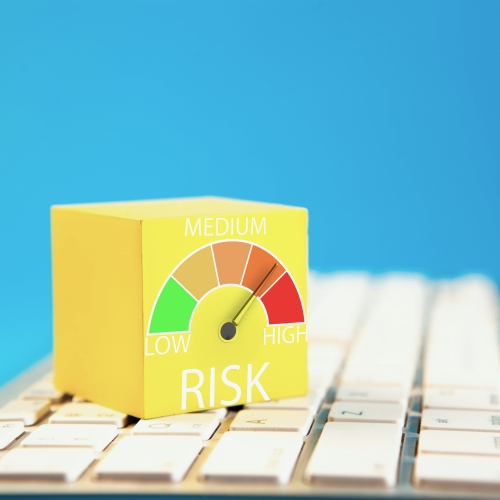
Well, we know that adopting AI is helping organisations grow and stay competitive with market leaders. But what many organisations don’t consider is that AI comes with a completely unique set of risks compared to other technologies, including biased decision-making, large-scale data storage, increasing difficulty to adhere to changing legislations and regulations, and a lack of transparency to the way AI tools make decisions.
Without effective governance structures to define and control AI use within organisations, any one of these risks could lead to significant reputational or financial damage.
It is often not the AI itself that increase these risks, but individual misuse, brought about by gaps in communication, policies and a general lack of understanding of its capability and the need for good governance structures around its adoption. The key thing business leaders should ask themselves is:
Effective governance must consider the whole AI lifecycle, from design to operations. You need to assess where AI is used and the possible risks at each stage, as well as ensure that appropriate precautions and frameworks are established to mitigate threats. This includes ensuring all staff understand how to use AI correctly, and in which circumstances.
So, what can business leaders do to stay safe?
Firstly, you must acknowledge and ensure AI systems are designed with safeguards in place, and that this is the default before any AI system is used within your business. This cannot simply be a goal you aim towards.
The NCSC has outlined practical actions you can take to reduce these risks, including:
As AI systems evolve, there will be emerging vulnerabilities. Breaches will occur, but it is how well prepared you are, that will determine if your organisation can overcome them quickly and effectively.
The ISO 42001 framework was developed to help integrate governance with AI in organisations, and is the first international standard for Artificial Intelligence Management Systems (AIMS). It provides a structure for organisations to create clear guidelines for AI usage, so they can:
Aligning your business with the standard provides you with a demonstrable way to show you are adopting AI maturely and safely. Having this impartial view of your processes gives you confidence that they are effectively protecting you from AI-related threats.
Additionally, NCSC have partnered with the UK Government Department for Science, Innovation and Technology (DSIT) to create the AI Security Code of Practice. The Code of Practice details the basic security principles that organisations can implement, and is worth reading to gain a greater understanding of what is expected from your organisation to stay protected using AI systems.
The time to act is now. Risks and threats are constantly evolving, and we must adapt with these, not fall behind. The DSIT has stated that “Every business in the UK has a part of play. Criminals will not just target government systems and critical infrastructure. They will target ordinary companies, of every size, in every sector.”